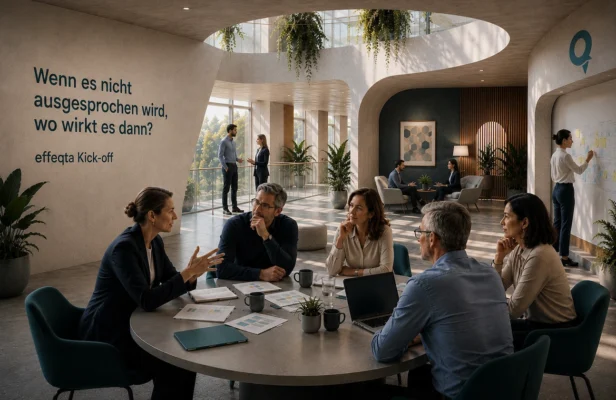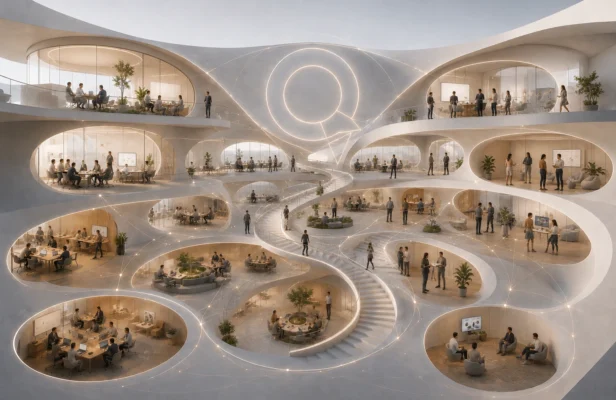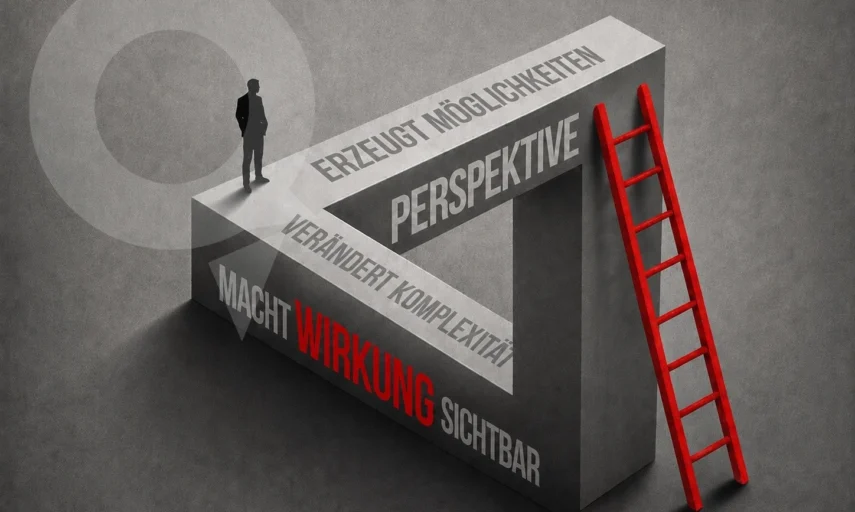
Why leadership, learning capacity, and perspective reach far beyond the workplace
Collaboration does not emerge from processes, technologies, or structures alone. What truly matters are relationships, communication, responsibility, and the way people work together every day.
Work is far more than performance or productivity. For many people, it is one of the most formative environments of their lives. Over months and years, people spend a significant part of their lives within companies and organizations. This shapes how they think, communicate, deal with uncertainty, take responsibility, or experience conflict.
Organizations therefore always have a societal impact. They shape behavior, trust, and patterns of learning — and ultimately influence how people interact outside of work as well.
People are always learning
Learning does not happen only in training programs. People learn constantly — including in destructive environments. They may learn to hide problems, avoid responsibility, withdraw from conflict, or protect themselves instead of solving problems together.
That is learning too. But it is learning shaped by pressure, fear, or constant evaluation.
Over time, this often creates exactly the kinds of problems that later appear as operational or cultural crises: declining ownership, political communication, slow decision-making, growing friction, and diminishing trust.

Leadership as a responsibility for conditions
effeqta therefore does not view leadership primarily as hierarchy or control. For us, leadership means creating conditions in which people can remain capable of working, learning, and taking responsibility.
Because individual development is not only a personal matter. It is social and economic capital.
Organizations influence whether people develop trust, take responsibility, and contribute to keeping projects, organizations, and societies capable of integration, development, and action — especially under uncertainty.
Our systemic perspective
effeqta does not see projects and organizations as purely technical systems, but as complex social environments of interaction and impact.
Communication, responsibility, perception, decision-making, trust, tension, and collaboration constantly influence one another. Problems therefore rarely emerge in isolation, but within patterns of interaction and organizational dynamics.
Based on this understanding, we have developed systemic models, reflection spaces, and organizational methods that are intended not only to support operational project work, but also to strengthen long-term learning, integration, and development capacity.
Our work therefore focuses not only on processes and structures, but also on the conditions under which people can:
- take responsibility
- integrate different perspectives
- deal with uncertainty
- handle conflict constructively
- and remain capable of working and developing over the long term
This includes, among other things:
- shared leadership responsibility
- protected reflection spaces
- transparent responsibility structures
- learning-oriented decision frameworks
- limited power dynamics
- psychological safety
- and the development of systemic and perspective-based thinking
Technology and governance as support
Our governance and AI architecture follows the same principle. Technology should support people — not replace them. Reflection should enable orientation — not surveillance. Development should not be controlled, but responsibly enabled.
That is why we intentionally create protected spaces, transparent responsibility structures, and limited power logics that support long-term learning, reflection, and integration — even under uncertainty and growing complexity.
Related article: Organizational capability in the age of AI.
Organizations shape society
We believe organizations share responsibility for the kind of society that emerges.
People do not leave their experiences at work behind when they walk out the door. They carry trust or mistrust, communication patterns, and ways of relating to others into families, communities, and society itself.
That is why we see leadership, development, and organizational design as part of a larger ecosystem of shared future capability.